Get Noticeably Whiter Teeth with John K. Drisdale’s Whitening Services in Midland
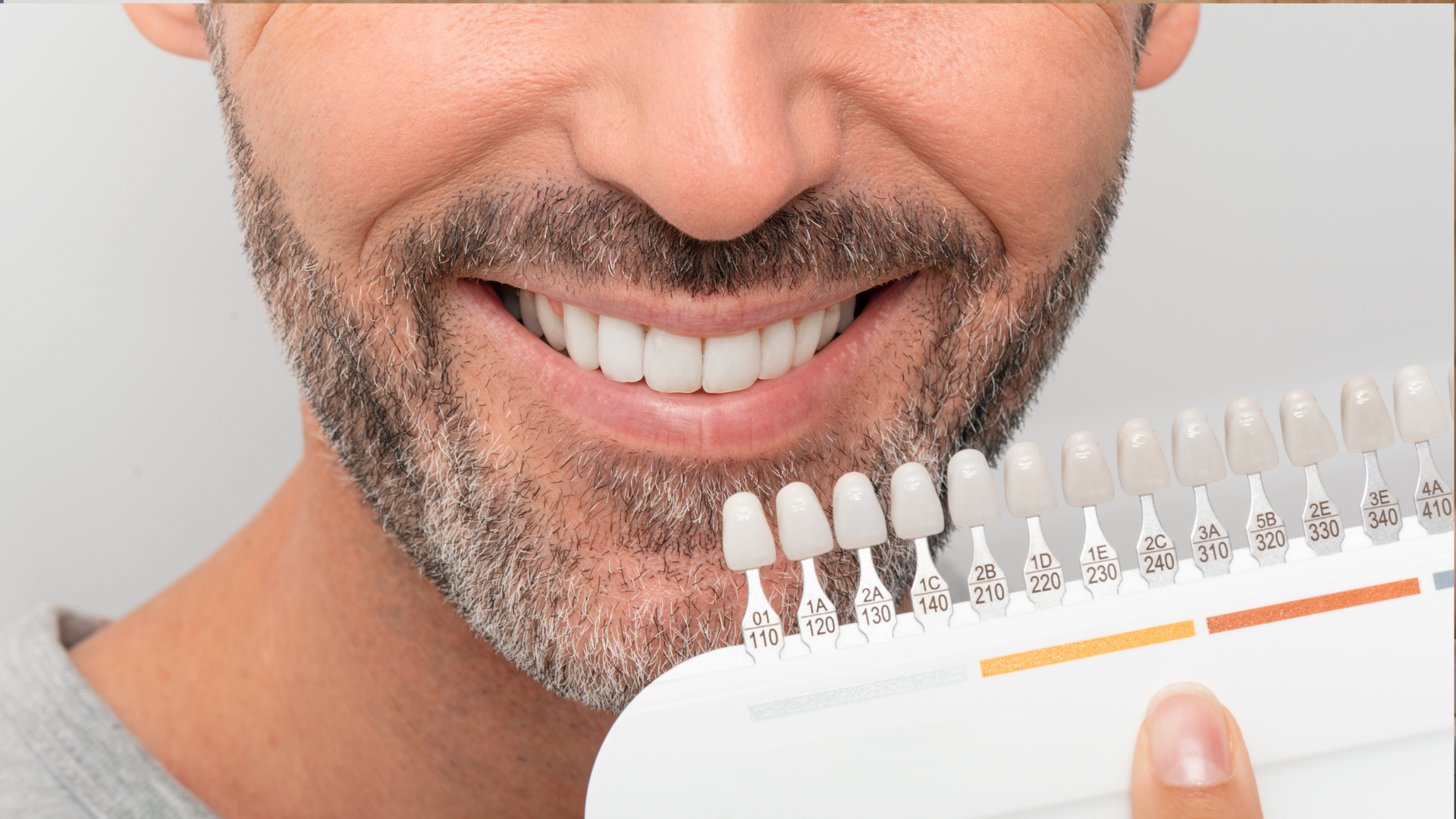
A man with a beard is smiling while holding a tooth color chart.

Do you hide your smile in photos or feel less confident in social situations because of discolored teeth? You're not alone. Many people experience a natural dulling or staining of their teeth over time, but the good news is that achieving a brighter, more radiant smile is more accessible than ever. If you're looking for effective and safe teeth whitening in Midland, look no further than Dr. John K. Drisdale, DMD and the dedicated team at Dentistry of Midland.


While countless at-home remedies and over-the-counter kits promise dazzling results, professional teeth whitening offers a level of safety, effectiveness, and lasting brilliance that these options simply can't match. In this blog, we'll explore why professional teeth whitening at Dentistry of Midland is the ideal choice for achieving a noticeably whiter smile that truly shines.


Why Choose Professional Teeth Whitening?

When it comes to enhancing your smile, the "do-it-yourself" approach often falls short and sometimes even poses risks. Professional teeth whitening, on the other hand, prioritizes your oral health and the stunning results you desire.


Safety First

One advantage of professional whitening is its inherent safety. Over-the-counter kits can be a gamble, often leading to issues like:


  • Gum Irritation: Improperly fitted trays or excessive bleaching gel can cause painful and damaging irritation to your gums.
  • Uneven Results: Without professional guidance, it's common to see splotchy or inconsistent whitening, which can leave your smile looking unnatural.
  • Tooth Sensitivity: When used without supervision, high concentrations of bleaching agents can lead to severe and prolonged tooth sensitivity.


At Dentistry of Midland, your safety is our paramount concern. Dr. Drisdale and his team meticulously assess your oral health before any treatment, ensuring the whitening process is effective and entirely safe for your gums and teeth.


Superior Results

Professional-grade whitening agents are significantly more potent and effective than anything you can buy off the shelf. This means you can achieve noticeably whiter shades – often several shades lighter – in a single visit. Our customized treatment plans target discoloration, ensuring a uniform and brilliantly white smile that genuinely stands out.


Longer-Lasting Whiteness

Beyond the immediate impact, professional treatments provide more durable and longer-lasting results. While at-home kits offer a temporary fix, our methods are designed to penetrate deeper, leading to a more stable and enduring transformation. We'll also provide you with simple maintenance tips to help extend the life of your beautifully whitened smile.


The John K. Drisdale Difference: Your Dentist in Midland

What sets Dentistry of Midland apart as the premier destination for teeth whitening in Midland? Our unwavering commitment to excellence, personalized care, and a patient-centered approach makes a difference.


Expertise and Experience

Dr. John K. Drisdale, DMD, brings expertise and experience to every procedure. His dedication to continuous learning and mastery in cosmetic dentistry ensures you receive the highest standard of care. With a keen eye for aesthetics and a deep understanding of dental science, Dr. Drisdale can achieve natural-looking, stunning whitening results.


Personalized Approach

Every smile is unique, and so should its treatment plan. At Dentistry of Midland, your journey to a brighter smile begins with a thorough consultation. We take the time to listen to your concerns, understand your goals, and assess your oral health. This allows us to craft a tailored whitening plan that addresses your specific needs and helps you achieve your desired whiteness.


State-of-the-Art Technology

Our practice is equipped with cutting-edge technology and utilizes the latest advancements in dental techniques. From advanced light activation systems that enhance whitening efficacy to desensitizing agents that minimize discomfort, we leverage the best tools to ensure a comfortable and practical experience. Our welcoming environment is designed to put you at ease when you step through our doors.


Comprehensive Care

At Dentistry of Midland, teeth whitening is not an isolated service; it's an integral part of our comprehensive dental services. As your trusted dentist in Midland, Dr. Drisdale and his team prioritize your oral health. We ensure that your teeth and gums are healthy before proceeding with any cosmetic treatment, guaranteeing a beautiful smile that is also healthy and strong.


What to Expect: The Teeth Whitening Process at Dentistry of Midland

Curious about what your journey to a brighter smile will entail? Here's a brief overview of the professional teeth whitening process at Dentistry of Midland:


Initial Consultation

Your path to a whiter smile begins with a thorough consultation. During this visit, Dr. Drisdale will:


  • Assess your oral health: We'll examine your teeth and gums to ensure they are healthy and suitable for whitening.
  • Discuss your goals: We'll listen to your expectations and discuss the realistic outcomes you can achieve.
  • Answer your questions: You can voice any concerns and get clear, comprehensive answers.


The Whitening Procedure

The in-office whitening procedure is efficient and comfortable:


  • Preparation: We'll carefully protect your gums and soft tissues to ensure only your teeth are exposed to the whitening gel.
  • Gel Application: A professional-grade whitening gel is precisely applied to your teeth.
  • Activation: Depending on the system used, a specialized light may activate the gel and accelerate the whitening process.
  • Completion: The procedure typically takes an hour, and you'll see a significant difference immediately.


Post-Treatment Care

To maintain your brilliant results, we'll provide simple post-treatment instructions, such as avoiding highly staining foods and beverages for a short period. If appropriate, we may also recommend touch-up kits for at-home maintenance to help extend the life of your whitened smile.


Real Results, Real Confidence

Imagine genuinely smiling without hesitation, knowing your teeth are sparkling white. Professional teeth whitening at Dentistry of Midland can dramatically boost your confidence, enhance your self-image, and leave a lasting positive impression. A brighter smile can transform your appearance and your feelings about yourself.


Don't let discolored teeth hold you back any longer. Take the first step towards the radiant smile you've always dreamed of.


Frequently Asked Questions (FAQs)

  • How long do professional teeth whitening results last?

    The longevity of your results can vary depending on your diet and oral hygiene habits, but typically, professional whitening results can last from six months to two years. Regular touch-ups and good oral hygiene can help extend the brightness.

  • Will teeth whitening make my teeth sensitive?

    Some temporary sensitivity is common after professional teeth whitening, but it usually subsides within a day or two. At Dentistry of Midland, we use techniques and products designed to minimize sensitivity, and we can also recommend desensitizing toothpaste or gels if needed.

  • Can I whiten my crowns or veneers?

    Describe the item or answer the question so that site visitors who are interested get more information. You can emphasize this text with bullets, italics or bold, and add links.No, professional teeth whitening only works on natural tooth enamel. Crowns, veneers, and other dental restorations will not whiten. If you have existing restorations that no longer match your desired tooth shade, Dr. Drisdale can discuss options for replacing them to match your newly whitened smile.

  • Is professional teeth whitening safe?

    Yes, professional teeth whitening is very safe when performed by a qualified dental professional like Dr. John K. Drisdale, DMD. We take precautions to protect your gums and ensure the treatment is appropriate for oral health.

  • How many whitening sessions will I need?

    Many patients achieve their desired results in just one in-office whitening session. However, depending on the severity of discoloration and your desired shade, a follow-up session or at-home touch-ups may be recommended.

Conclusion

A noticeably whiter smile is within reach, and with Dr. John K. Drisdale and the team at Dentistry of Midland, you can achieve it safely and effectively. We combine expertise, personalized care, and advanced technology to deliver exceptional teeth whitening in Midland.


Don't wait to achieve the bright, confident smile you deserve. Contact Dentistry of Midland today to schedule your consultation and take the first step towards a more radiant you!


Dentistry of Midland: www.johndrisdale.com


Contact Us: https://www.dentistryofmidland.com/contact-us

Request Appointment

Disclaimer: The information provided in this blog is intended for general knowledge and informational purposes only, and does not constitute medical advice. It is essential to consult with a qualified dental professional for any health concerns or before making any decisions related to your oral health or treatment. Individual results for teeth whitening may vary.
Dentist in blue gloves examining a patient in a dental chair with mouth open
October 24, 2026
Worn down teeth from grinding or acid? Learn how full mouth reconstruction in Midland, TX rebuilds your bite from the foundation up, and what to expect.
Dental model with teeth beside toothbrush and floss on a gray background
October 24, 2026
Missing several teeth? Compare dental bridges, partial dentures, and implants in Midland, TX: timelines, lifespans, cost factors, and who each suits.
September 11, 2026
Here's the reassuring part first: in the vast majority of cases where Invisalign seems to have stalled, stopped tracking, or is running behind schedule, the fix is a refinement, not a restart. It's a genuinely annoying moment, watching a treatment you've stuck with for months seem to stop cooperating for no clear reason. But "not working as expected" covers a wide range of situations, from a single tray that won't seat flush to a timeline that's quietly slipped by six weeks, and most of them have a clear explanation and a straightforward next step. Invisalign works by using a series of custom, removable clear aligners, each slightly different from the last, to apply gentle, continuous pressure that gradually moves teeth into a planned position over roughly one to two weeks per tray. When that process doesn't go as expected, it's almost always tied to how consistently the aligners are worn, how well a given tray is tracking, or a plan that needs a mid-course adjustment. Quick Answer: Loose-fitting trays, teeth that seem stuck, or a schedule that's fallen behind are usually wear-time or tracking issues, not treatment failure. A dentist typically resolves this with a refinement: new scans and a short new series of aligners to finish the movement the original plan didn't quite complete. Key Takeaways Mild pressure for the first one to three days of a new tray is normal and means the aligner is doing its job. A tray that won't snap flush against your teeth after a couple of weeks is the clearest sign something's off. Not wearing aligners the full 20 to 22 hours a day is the single most common reason treatment slows down. A refinement means new scans and a short new set of aligners, not starting the whole plan over. Lost or loose attachments, the small tooth-colored bumps some plans use, can quietly stall how well a tray fits. Teens still growing sometimes need their plan reassessed partway through, which is normal rather than a sign anything went wrong. How Invisalign Is Supposed to Work Invisalign starts with a digital scan of your teeth, which gets turned into a 3D treatment plan mapping out exactly how each tooth needs to move, in what order, and over how many stages. From that plan, a lab produces a full series of clear aligner trays, each one a small step closer to the final position and each slightly different from the one before it. You wear one tray for about one to two weeks, then move to the next, and the plastic itself applies gentle, continuous pressure that encourages the bone around each tooth to remodel slowly around the new position. It's a slower process than traditional braces by design. That gradual pace is part of what makes it more comfortable and lets you keep wearing removable trays instead of fixed brackets and wires. For it to work the way it's planned, though, two things have to hold true: you need to actually wear the trays close to the full recommended 20 to 22 hours a day, and each tray needs to seat fully, or "track," before you move to the next one. When either of those breaks down, that's when people start to feel like Invisalign isn't working. What "Working" Actually Feels Like, Week to Week A new tray typically feels snug, sometimes a little too snug, for the first one to three days. That tightness is a good sign. It means the tray is applying pressure to teeth that haven't caught up to that stage yet. By day three or four, most people stop noticing it entirely, and the tray should sit flush against every tooth with no visible gap. That's the pattern to expect roughly a dozen times or more over the course of treatment: tight for a couple of days, comfortable and fully seated after that, repeat. If a tray still doesn't fit flush by the end of its second week, or the discomfort doesn't ease up at all, that's outside the normal pattern and worth mentioning at your next check-in rather than waiting. The Real Warning Signs Something's Off The Tray Won't Seat Flush Against Your Teeth This is called poor tracking, and it's the clearest physical sign that a tray isn't doing its job. You'll usually see it before you feel it: a visible gap between the aligner's edge and the tooth, especially near the back molars or along teeth that are rotating rather than just sliding. Poor tracking on one tray tends to compound, since each aligner is built assuming the tooth reached its target position in the tray before it. If tray four didn't fully seat, tray five is starting from a slightly different place than the plan expected, and the gap can widen from there rather than close on its own. Your Teeth Haven't Visibly Moved Since Your Last Check-In Progress with Invisalign is gradual, so this one takes a little patience to judge fairly. But if you're several trays into a stage and comparing photos shows genuinely no change, or a tooth that was supposed to be rotating looks exactly the same as it did a month ago, that's worth flagging. Sometimes it's simply a slower-moving tooth catching up to the rest of the plan. Sometimes it means a tray isn't tracking well enough to actually be moving that tooth at all. You're Consistently Behind the Planned Schedule Most Invisalign plans come with an estimated total timeline and a rough number of trays. Falling a tray or two behind because of a busy week is common and rarely matters much. Falling weeks behind, repeatedly, is a different story, and it's almost always tied back to wear time rather than anything wrong with the plan itself. If your original estimate was ten months and you're now six weeks past that with several stages left to go, that gap is worth a direct conversation rather than pushing forward and hoping it closes on its own. An Attachment Fell Off and You Didn't Notice Right Away Many Invisalign plans use small, tooth-colored composite bumps called attachments, bonded directly onto certain teeth, which give the aligner tray something to grip for more complex movements like rotation or extrusion. They're durable, but they can pop off, especially from chewing something hard or sticky. A missing attachment doesn't always hurt or feel obviously different, which is exactly why it can go unnoticed for a week or two while that particular tooth quietly stops moving as planned. If a tray suddenly feels different on one specific tooth compared to the rest of your mouth, running your tongue over that spot is worth doing. The Most Common Reason Treatment Stalls: Wear Time If there's one answer behind most "Invisalign isn't working" situations, it's this one. The 20-to-22-hour daily wear recommendation isn't a suggestion with room to spare; it's closer to a floor than a target. That leaves two to four hours a day for eating, drinking anything besides water, and brushing and flossing, combined. It's easy to underestimate how quickly that adds up: a long lunch, a coffee sipped slowly through the afternoon, forgetting to pop the tray back in after brushing before bed. Miss even three or four hours a day, every day, and a tray that was supposed to fully seat within two weeks might not get there at all before the next one is due. The math is unforgiving in a way that traditional braces, bonded permanently to the teeth, simply aren't. It's also the single most fixable cause on this entire list, since it's the one within a patient's direct control. What a Refinement Actually Involves When a treatment plan needs to catch up or fine-tune a few remaining movements, most dentists reach for a refinement rather than restarting from the beginning. That means a new digital scan of your teeth as they currently sit, not as they sat at the original consultation, and a new short series of aligners built to finish the specific movements the first series didn't quite complete. Refinements are a normal, planned part of Invisalign treatment for a meaningful share of cases, not a sign that something went unusually wrong. Depending on how much correction is needed, a refinement series might run anywhere from a handful of trays to a couple of months' worth. The wait time to get a refinement scanned, fabricated, and back in your hands is typically a few weeks, worth factoring in if you're trying to plan around a specific event like a wedding. Teens, Growth, and a Question Worth Asking at Your Next Visit Teen patients bring an added variable that adult cases don't: ongoing jaw and facial growth that can shift how a treatment plan needs to unfold partway through. A plan built at the start of treatment sometimes needs a genuine reassessment months in, not because anything was done wrong, but because a growing jaw isn't a fixed target the way an adult's is. How much a specific teen's plan might need to shift, and when, isn't something a general guide like this one can answer. That's a conversation worth having directly at the next check-in, especially for a patient who started treatment early in their teens rather than closer to adulthood. When to Call the Office Instead of Waiting It Out A tray that's uncomfortably tight for more than the first three or four days, one that visibly won't seat after two weeks, a lost attachment on a tooth you can feel is supposed to be moving, or a schedule that's slipped by more than a few weeks are all reasons to call rather than continue on your own. None of these are emergencies, but none of them tend to resolve by simply switching to the next tray and hoping for the best either.  Frequently Asked Questions (FAQs)
More Posts